
Mr. K — Making a Hotel Feel Alive
Feature film · 2024 · Director: Tallulah H. Schwab · Produced by Lemming Film
Case study based on a conversation with STORM VFX Supervisor Randy van der Weide
Project Scope
Timeline: February 2023 – April 2024
Shot Count: 127
Team Size: 14
Toolset: Maya, Houdini, Nuke
Roles: STORM delivered the full scope of VFX; including on-set supervision, stunning CG creature work, refined vein FX, seamless tunnel and underwater integration, innovative techvis & animatics, high-end compositing, and close in-house grading collaboration.
Overview
Creating a world that feels real, yet quietly off
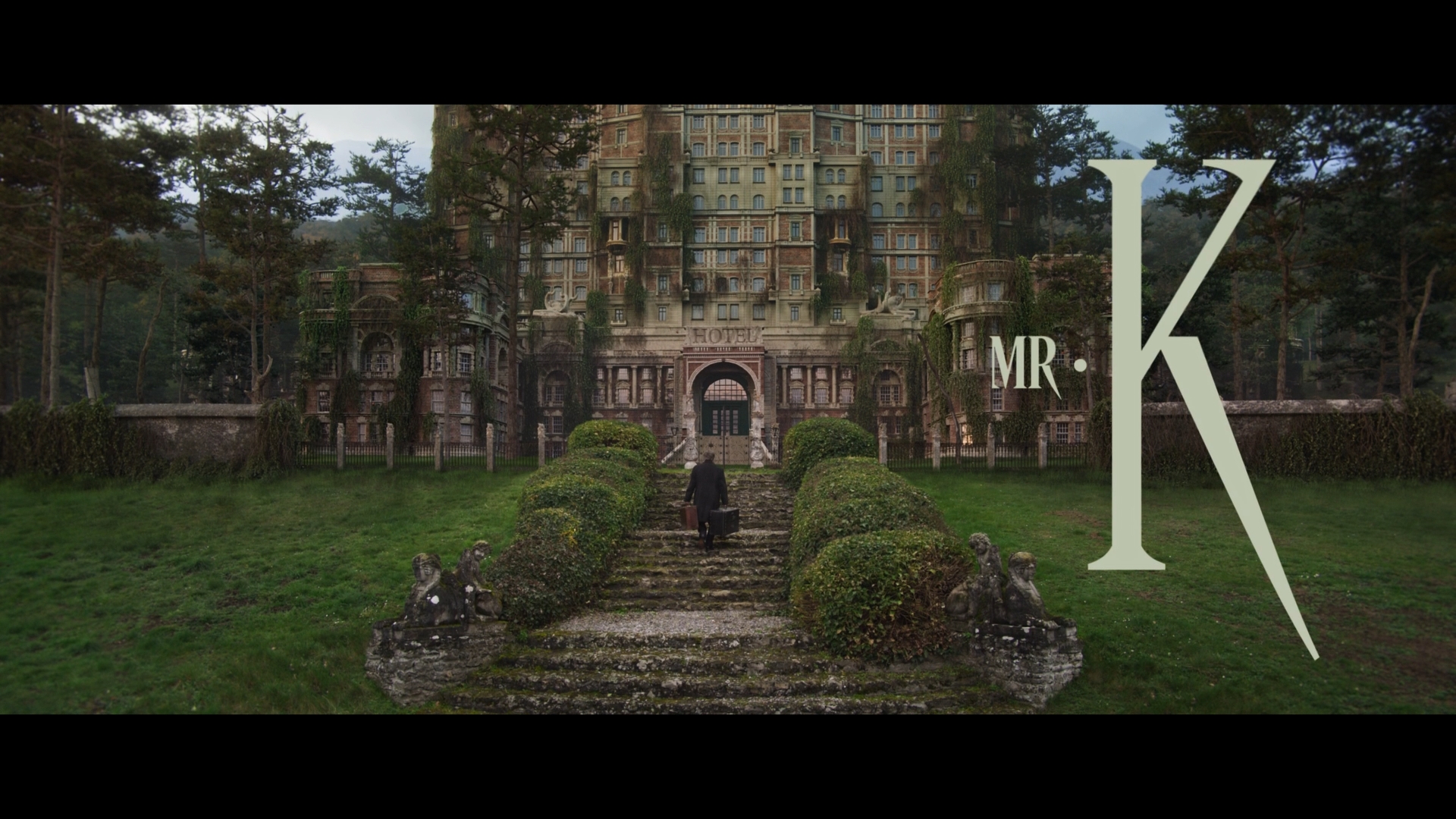
When Mr. K first landed at STORM, things moved fast. Director Tallulah H. Schwab’s vision was clear but unconventional: make the hotel feel alive. Not in a fantasy sense but subtly, as if the building itself were breathing, watching, changing. It needed to be mysterious and grounded in reality.
That creative ambition shaped our entire approach. From first meetings through final grade, we worked closely across departments VFX, color, direction to build a world where tension creeps in slowly. Veins spread across walls. A creature pulses beneath a membrane. Nothing is ever explained outright, but everything feels… off.
Core Visual Challenge
Breathing walls and creeping veins
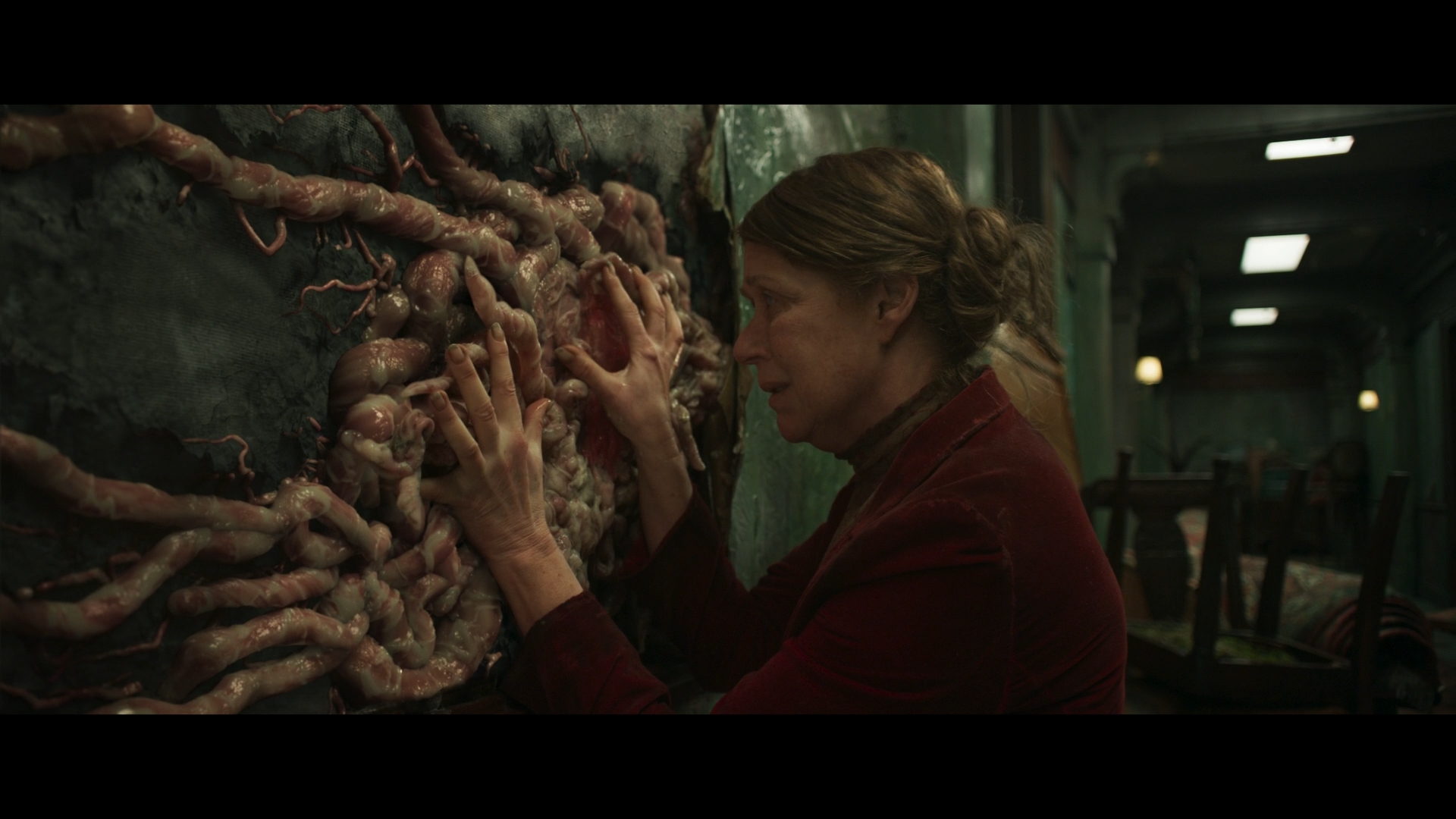
One of the film’s main visual arcs was making the hotel itself feel like a living presence. The spreading veins — manifestations of the hidden creature known as the Oracle — were first executed as in-camera effects. While the practical veins looked convincing on set, the edit revealed they couldn’t fully convey the organic movement and narrative tension the story required. This shift expanded the scope of the work: we transitioned to full-CG to give the Oracle’s veins a more unsettling presence.
With limited set reference, our FX artists crafted veins that seemed to push through the walls, cracking plaster and stretching surfaces. The animation had to feel subtle yet deliberate — something you only notice when it’s already too late. Dozens of motion variations were tested in close collaboration with the director to find precisely the right balance of realism and unease.
Key Sequences & Planning
Key Sequences & Planning
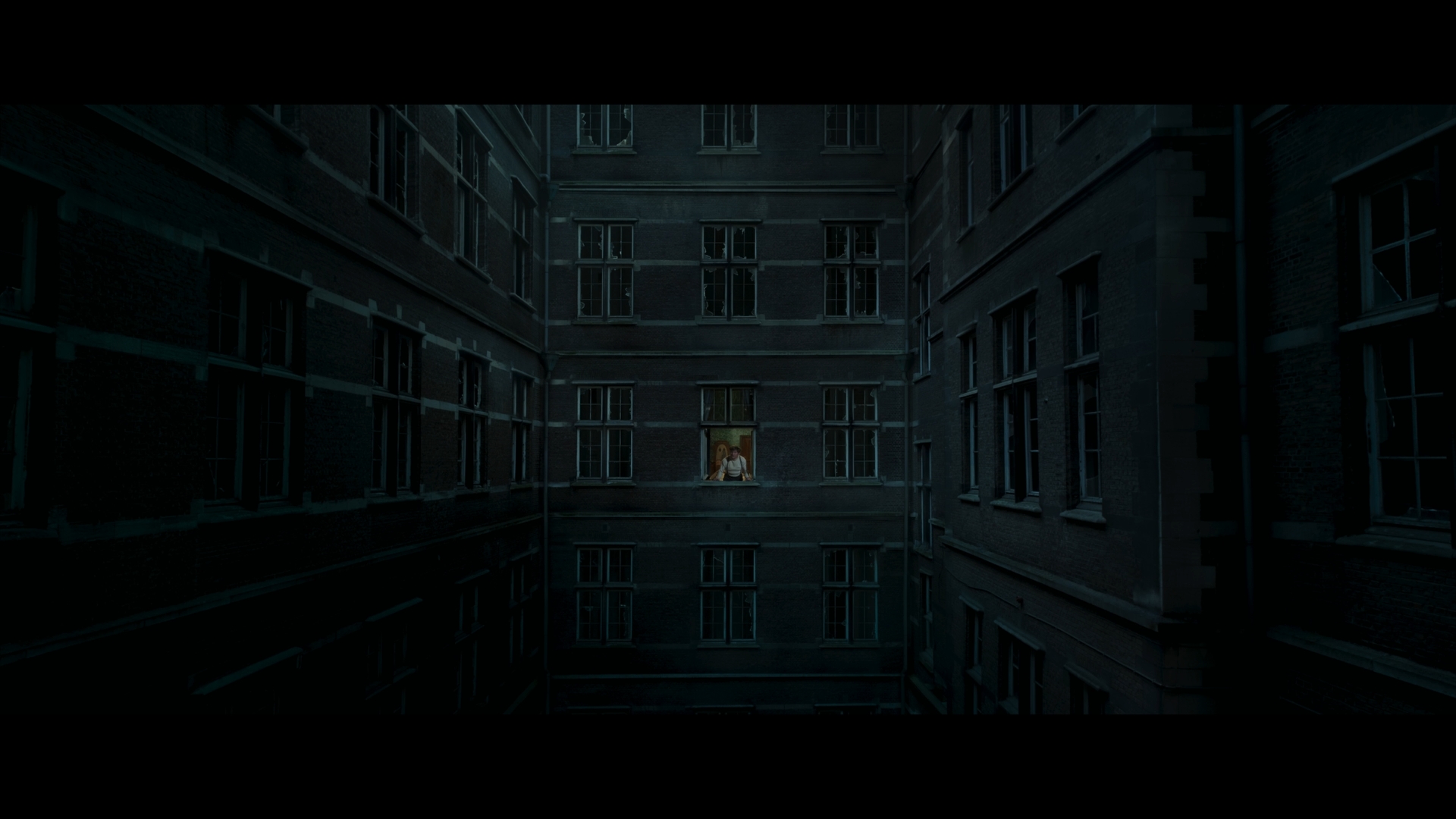
The underwater sequence posed another challenge: it had to be shot in a single day, with no room for trial and error. To prepare, we built a full 3D model of the underwater stage, including real-world lens data, accurate scale, and camera blocking. An animatic was created using real focal lengths and camera settings, allowing both director and DP to visualize every shot before arriving on set.
“We weren’t guessing. The animatic had real-world lenses, camera paths, and set scale. When we got to set, everyone already knew the plan — it kept us efficient, safe, and focused.”
— Randy
Because the sequence was heavily blue-lit on set, colorist Peter Bernaers began with a neutral grade before integrating the creature. This allowed for clean CG integration and consistent visual language across the sequence, without muddying contrast or depth.
Creature Development & Lookdev
Designing the Oracle
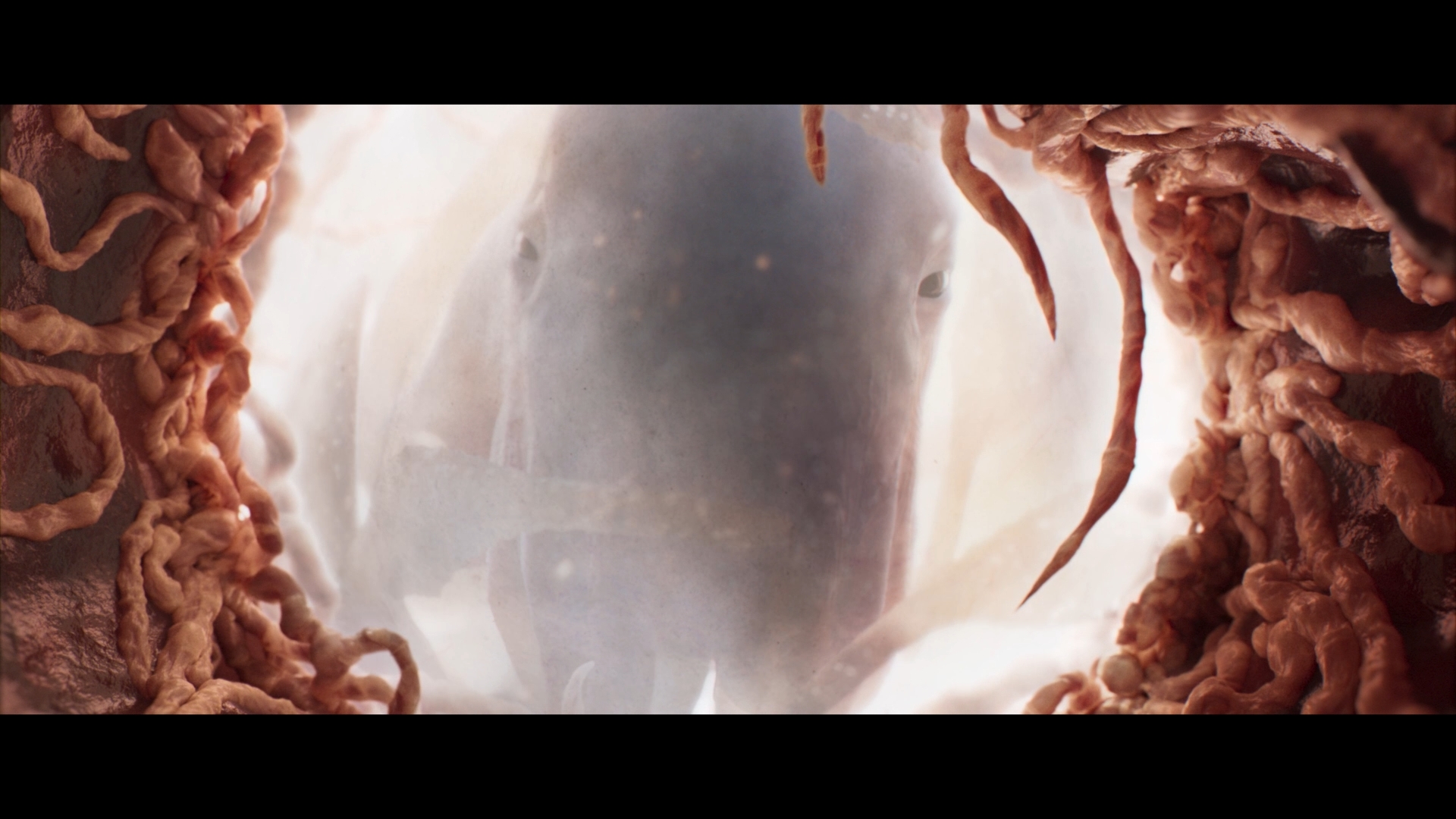
The Oracle was designed as a unique, unsettling presence; a creature both beautiful and grotesque, trapped inside a membranous sac deep within the tunnel. Initially, a practical puppet was considered, but technical complexity and tight scheduling made full-CG the better option. This gave us more freedom to explore movement and design nuance.
The Oracle had to feel equally convincing in two radically different lighting situations: suspended in a translucent membrane within a warm, backlit tunnel, and submerged in a cold, deep-blue underwater environment. To achieve this, we first defined its look in a neutral lighting setup. This allowed us to lock in the true colors and materials of the design without interference from scene lighting. Once approved, we digitally matched the lighting for both environments and integrated the Oracle accordingly. Working with the grader on neutrally lit plates further smoothed the process and ensured flexibility in post.
For the membrane sequence specifically, we delivered two separate layers: one with the fully integrated Oracle, clean and pressed against the tunnel walls without any membrane, and another with the translucent sac enveloping and obscuring the creature. This approach gave the director full control in grading, allowing visibility, atmosphere, and mood to be fine-tuned shot by shot.
“The sac wasn’t just a look, it had to move, shift, flex. By giving grading full control over that layer, we could dial in mystery or clarity per shot, live in the suite. That kind of flexibility is rare, and powerful.”
— Randy
One shot in particular pushed us to the edge: a close-up of Mr. K swimming toward the light, performed on set by a stunt double. The plan was to replace the face with actor Crispin Glover’s in post. Because of the on-set challenges and tight timing, not all the facial reference we needed of Crispin in that environment could be captured.
The body and motion worked – the CG clothing, the Oracle’s interaction, the underwater feel – but the face was missing. We tried to obscure it with hair or tentacles, but the moment demanded emotional clarity. In the end, we composited fragments of Crispin’s performance from other shots, blending them with the stunt double’s base through projection, warping, and shading.
“We had a full sequence that worked, except for the face. It took everything: subtle blends, borrowed angles, last-minute tweaks. But in the end, it holds up. You feel him.”
— Randy
Technical Highlight
The hardest shot and how we pulled it off
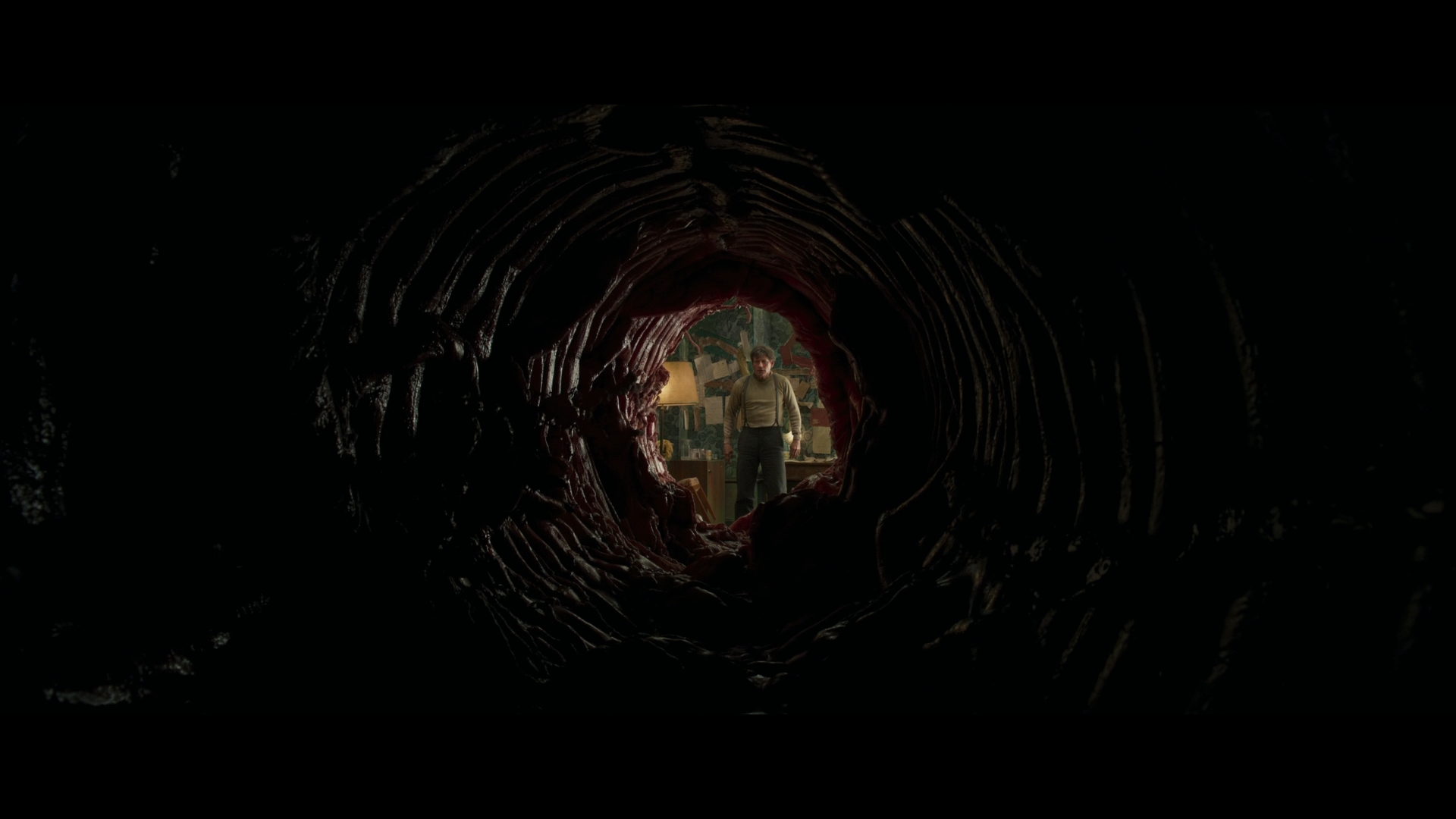
The final result is a grounded, emotional creature arc set in a world that feels real but quietly wrong. Through tight collaboration between CG, compositing, and in-house grading, we were able to move fast, stay flexible, and make creative decisions in real time. That trust and shared ownership made a real difference.
The relationship with Tallulah has already led to a new collaboration. Creative trust like that doesn’t just happen. It’s built through shared vision, flexible process, and a willingness to rethink how things are usually done.
Outcome & Collaboration
Built on trust, shaped by feeling
Emotion-first direction changes everything. It requires tools, teams, and workflows that protect tone under pressure — and a mindset shift from solving visuals to shaping feeling.
‘’The VFX had to make the hotel feel alive — natural, never over the top. Part of the world, not a trick. That was our goal.”
— Randy
Takeaways
What we learned from building tension, not tricks
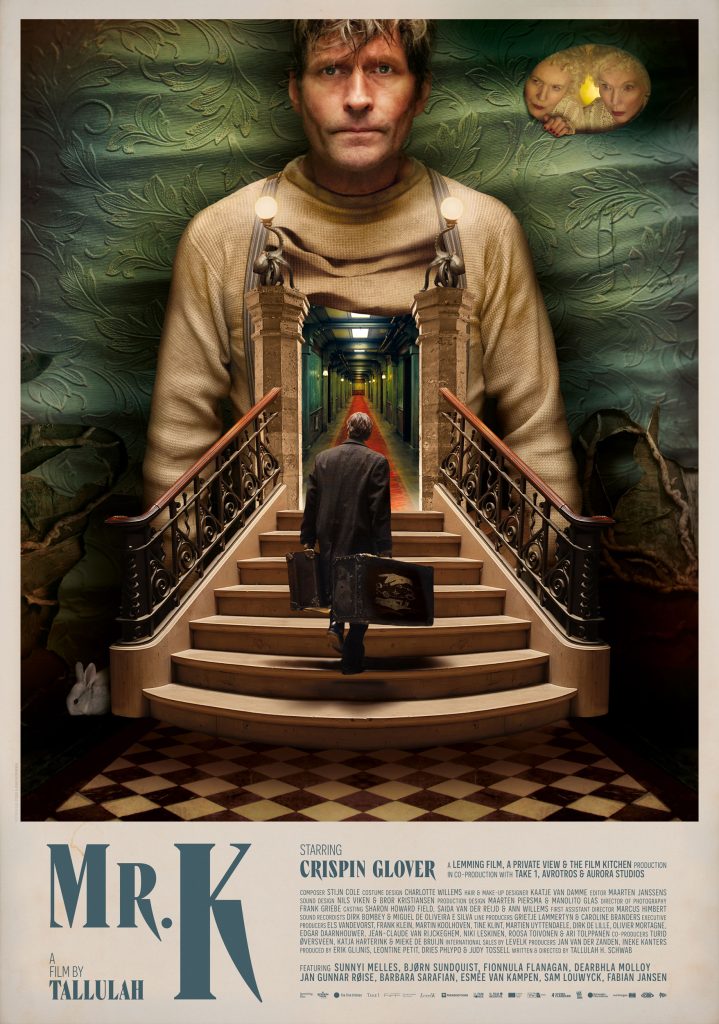
Mr K
2024
Storm did the visual effects, titles and color grading for this film.
Production Company
Lemming Film, A Private View
Producer
Erik Glijnis, Leontine Petit, Dries Phlypo, Judy Tossell
Director
Tallulah H. Schwab
Director of Photography
Frank Griebe
Client Post Supervisor
Antoine Vermeesch
Post Producer
Bieke Koppelmans, Michelle Hendrickx
Online editor
Mels Kroon
Colorist
Peter Bernaers
Motion Graphics Designer
Chris Coopmans
VFX Supervisor
Randy van der Weide
3D artist
Danny Torrelli. Pim Reinders, Roel Herrebrugh, Aron Baaijens
3D artist Interns
Youri den Boef, Victor Weijers
Digital Compositors
Anne Dirkx, Bart Griepink, Daisy Keehnen, Joppe de Graaf, Maarten van der Veen, Martina Regan, Rene Berendsen, Timo Aaldriks, Yorben Otto
Digital Compositors Intern
Koen de Jager

Westerdoksdijk 239
1013 AD Amsterdam
The Netherlands
info@stormpostproduction.com
+31 20 320 02 25
Chamber of commerce Nº 34315288
VAT Nº NL820021982B01
Terms & Conditions
© 2026 STORM postproduction